Used Wheels and tires for sale

  Results
Used machine
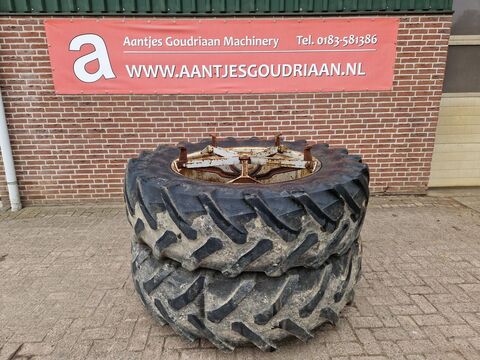
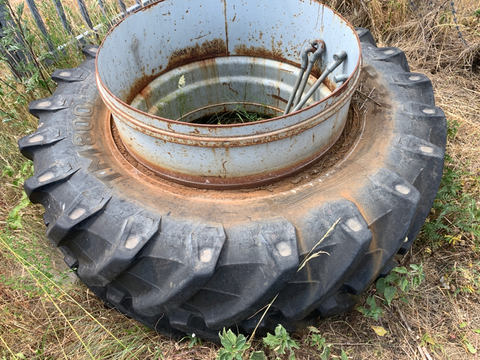
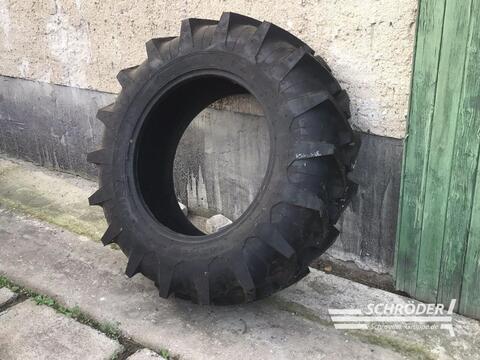
Pirelli 540/65R34

1.785 €incl. VAT 19% 

  • YOM 2001

6 Klemmhaken ohne Ösen für Tragradeine Decke ist defektFelgen DW15Lx34  Wheels and tires Tractor wheels

BLT Brandenburger Landtechnik GmbH

16909 Heiligengrabe, Germany

Wheels and tires / Pirelli

  27-07-2023 05:49

Used machine
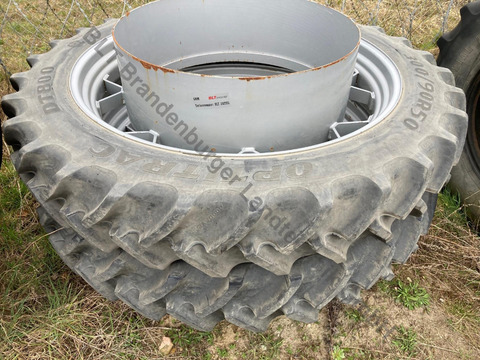
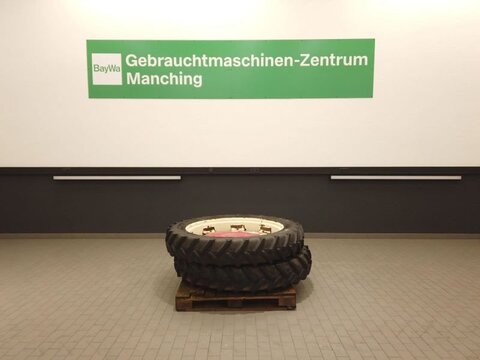
Good Year 300/90R50

2.380 €incl. VAT 19% 

  • YOM 2005
  • 200 h

Zwillingsrad zum 20.8R38Statischer Halbmesser 850 mmAußendurchmesser 1820 mmReifenbreite 306 mmincl. Verschlußhaken Wheels and tires Tractor wheels

BLT Brandenburger Landtechnik GmbH

16909 Heiligengrabe, Germany

Wheels and tires / Good Year

  24-07-2023 20:25

Used machine
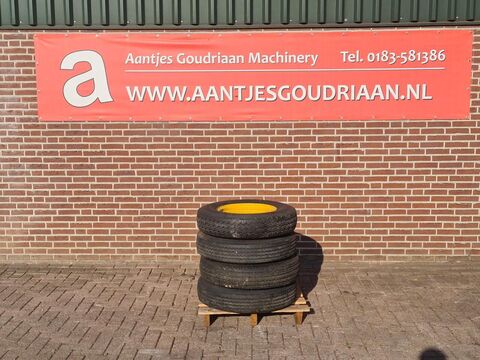
Sonstige Tigab

Price on request

  • YOM 2010

== Overige details (NL) ==4 banden met velg   • Banden maat 6.50 R15   • 6 gaast velg landbouwsteek   • Nette staat Staat: GebruiktB

Aantjes Goudriaan Machinery

2977 LA Goudriaan, Netherlands

Wheels and tires / Sonstige

  27-08-2022 09:03

We’ve shown you everything Results displayed.

For even better search results, we recommend using the filter options.

Hit 49 - 54 from 54 (Page 2 from 2)

Buy tractor wheels and rims for agricultural machinery

Tractor wheels and rims are crucial for the performance and efficiency of your machines. In agriculture in particular, choosing the right tires and rims is an important factor in ensuring optimum ground contact and the best possible traction.


How do I find the right tires for my area of application?


Whether you are operating a small farm tractor or a powerful large machine - the right tires make all the difference. Depending on the application, you can choose wheels with particularly good traction on uneven ground or rims for heavy loads. Pay attention to the specific requirements of your machines and choose accordingly.

In modern agriculture, radial tires usually have the upper hand due to their better soil protection, higher traction and fuel efficiency. They are ideal for farms that pay attention to maintaining the soil structure and regularly switch between field and road operation. Diagonal tires, on the other hand, are still used in special applications, especially for heavy loads or on rough terrain, where their robustness and stability are required.

The choice between the two therefore depends heavily on the conditions on site and the specific requirements of the farm.


Used tractor wheels and rims - a cost-effective alternative


It doesn't always have to be new. Used tractor wheels and rims offer an affordable way to equip your machines without compromising on quality. Many dealers offer well-maintained and tested tractor wheels and tractor rims that still have many years of use ahead of them. When buying, pay attention to the tire tread, possible cracks or damage. Also check whether the rims are damaged and still promise a long service life. For safety reasons, tire repairs should only be carried out by qualified personnel with suitable tools.

Frequently asked questions about tires

 Correct storage of tires

  1. Store the tractor tires clean and protected from heat, light and ozone sources.
  2. If possible, do not store tubeless tires horizontally. Only small tires may be stacked or stored flat.
  3. If tires are stored horizontally, they must be stored lug to lug.
  4. If tires are stored mounted on rims, remember to lower the tire pressure.
  5. Never store tires directly on the ground for long periods of time.


Why is tire pressure so important?

  • Protecting the ground: Low tire pressure increases the tire's contact area. This distributes the weight of the heavy agricultural machinery over a larger area and thus reduces soil compaction. Compacted soil can hinder the root development of plants and reduce water permeability.
  • Traction optimization: The correct tire pressure improves the traction of the machines. This is particularly important in wet or loose soils to prevent wheel spin and save fuel.
  • Fuel efficiency: Optimally set tire pressure reduces rolling resistance. This leads to lower fuel consumption and therefore lower operating costs.
  • Adapting to soil conditions: Farmers can adjust the tire pressure depending on the soil conditions and the operation. Lower pressure is often used in the field, while higher pressure is used for road travel.
  • Machine efficiency: The correct tire pressure contributes to overall machine efficiency by reducing vibrations and improving controllability.
  • Increasing yields: By reducing soil compaction and optimizing machine performance, the correct tire pressure can indirectly contribute to higher yields.